The Runner
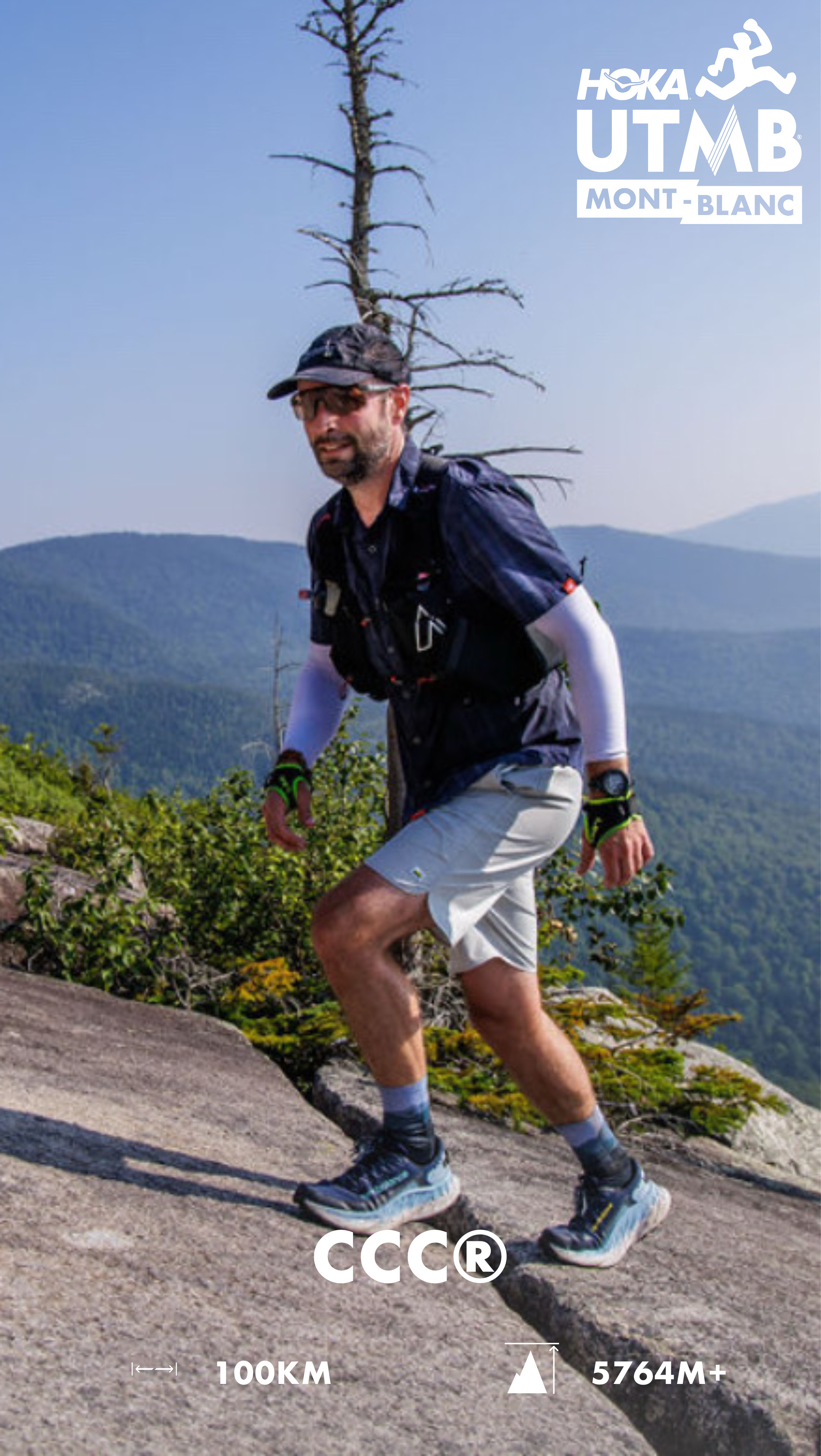
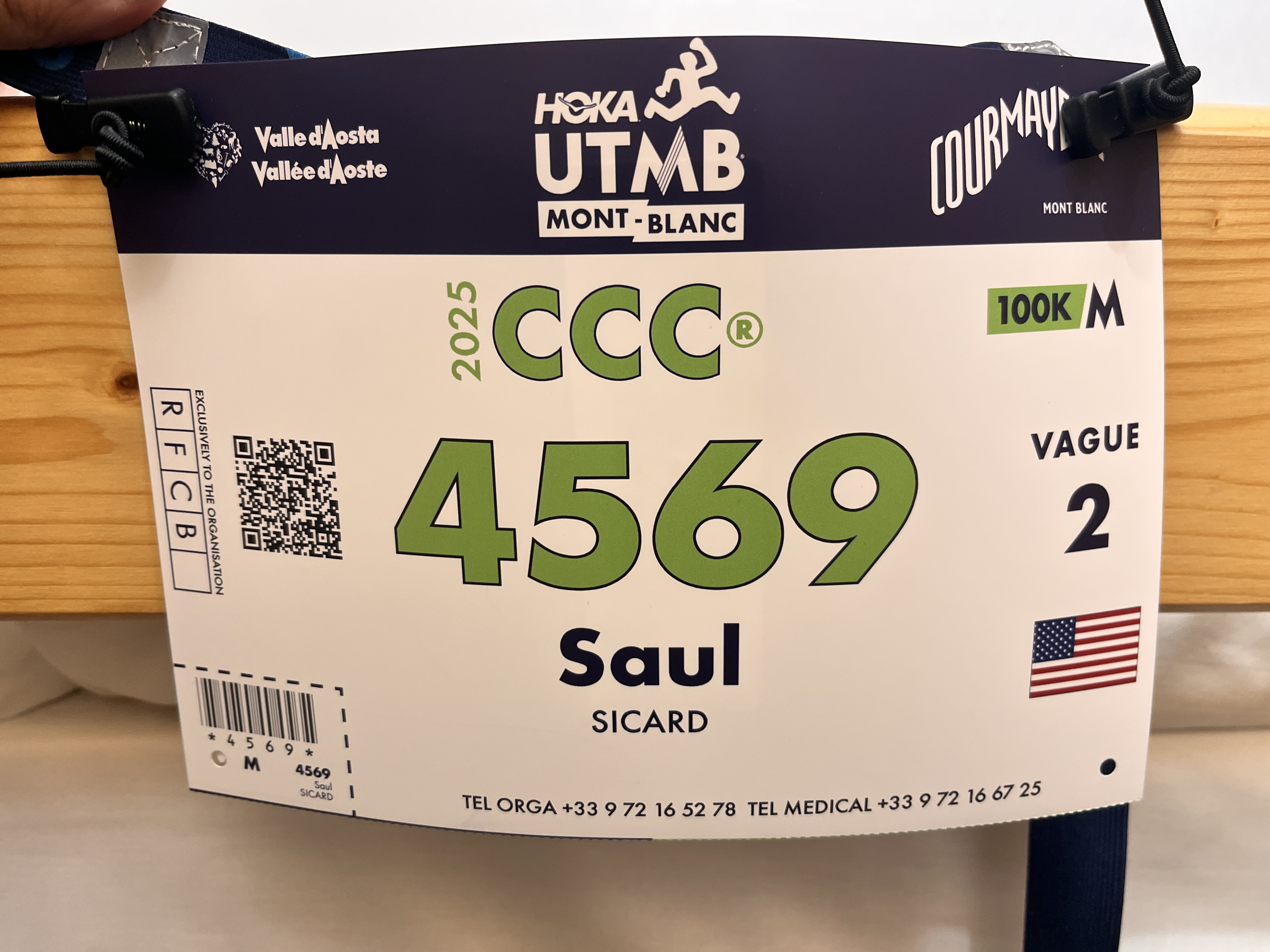
Bib 4569 · 40–44 M · CCC®
A Race Report
UTMB CCC — 101 km, 5,764 m of climbing.
August 28, 2025 · Courmayeur to Chamonix.
The Runner
Bib 4569 · 40–44 M · CCC®
I The Origin
"Some places mark you. Not with a scar, but with a question."
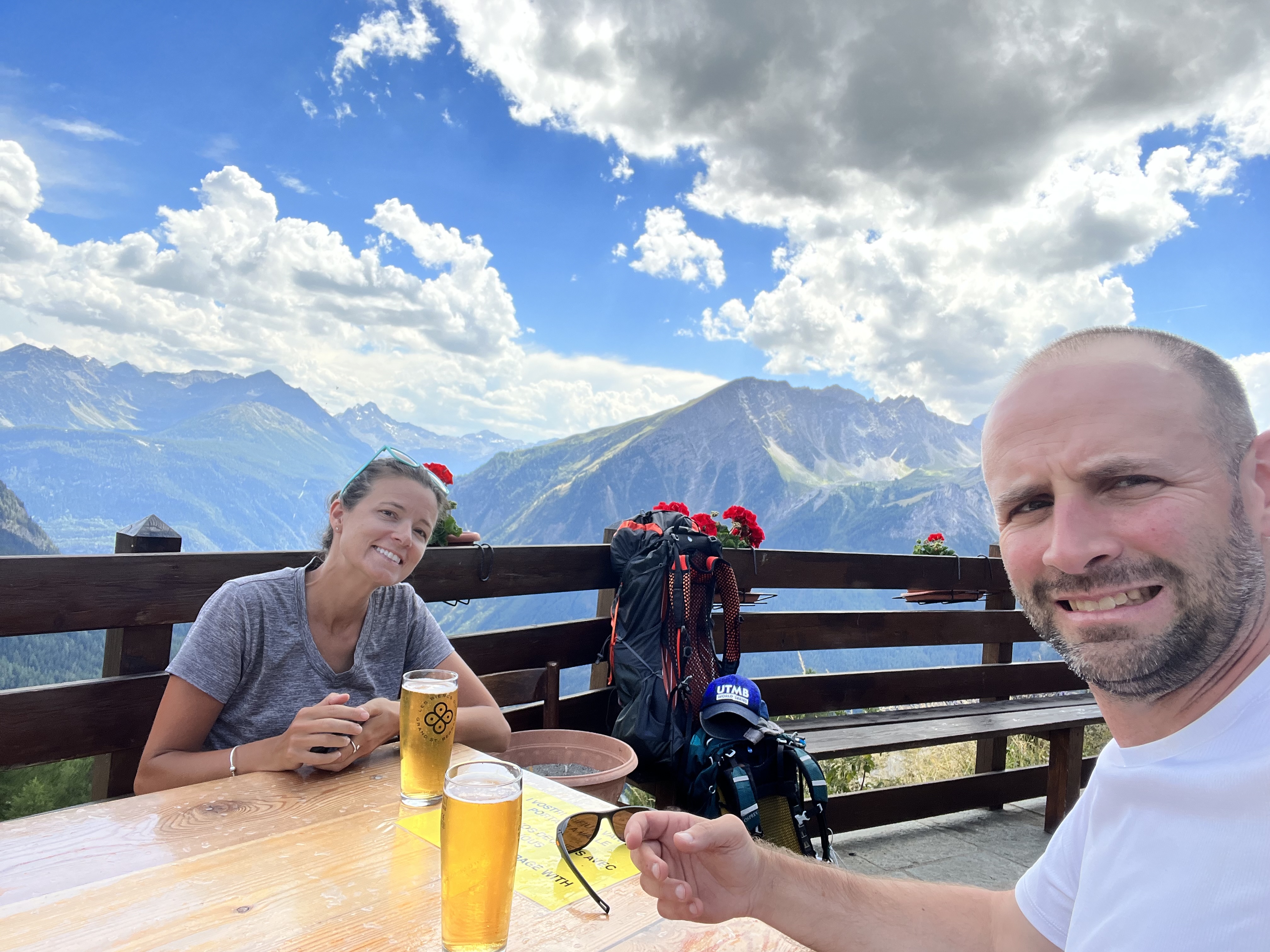
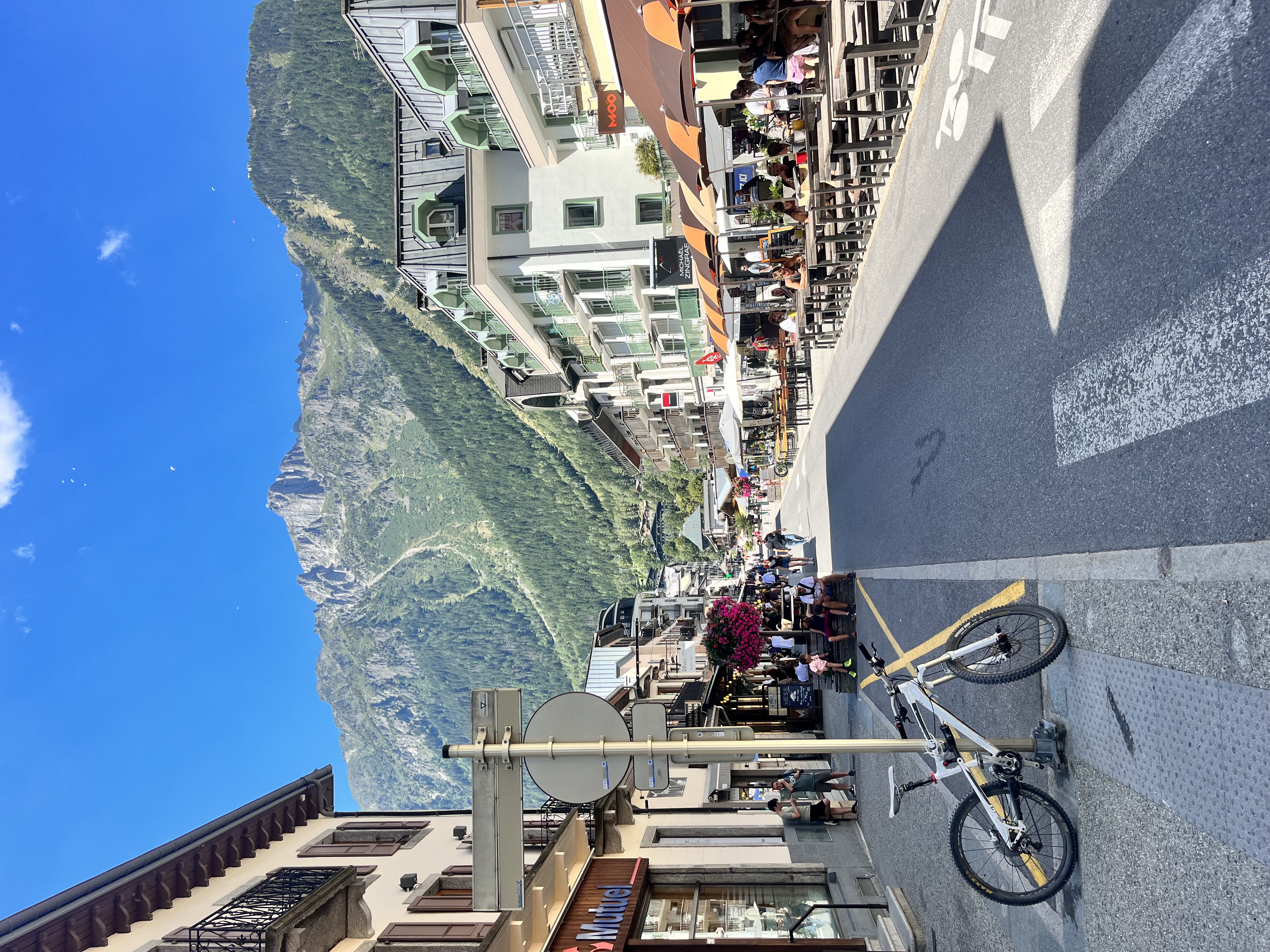
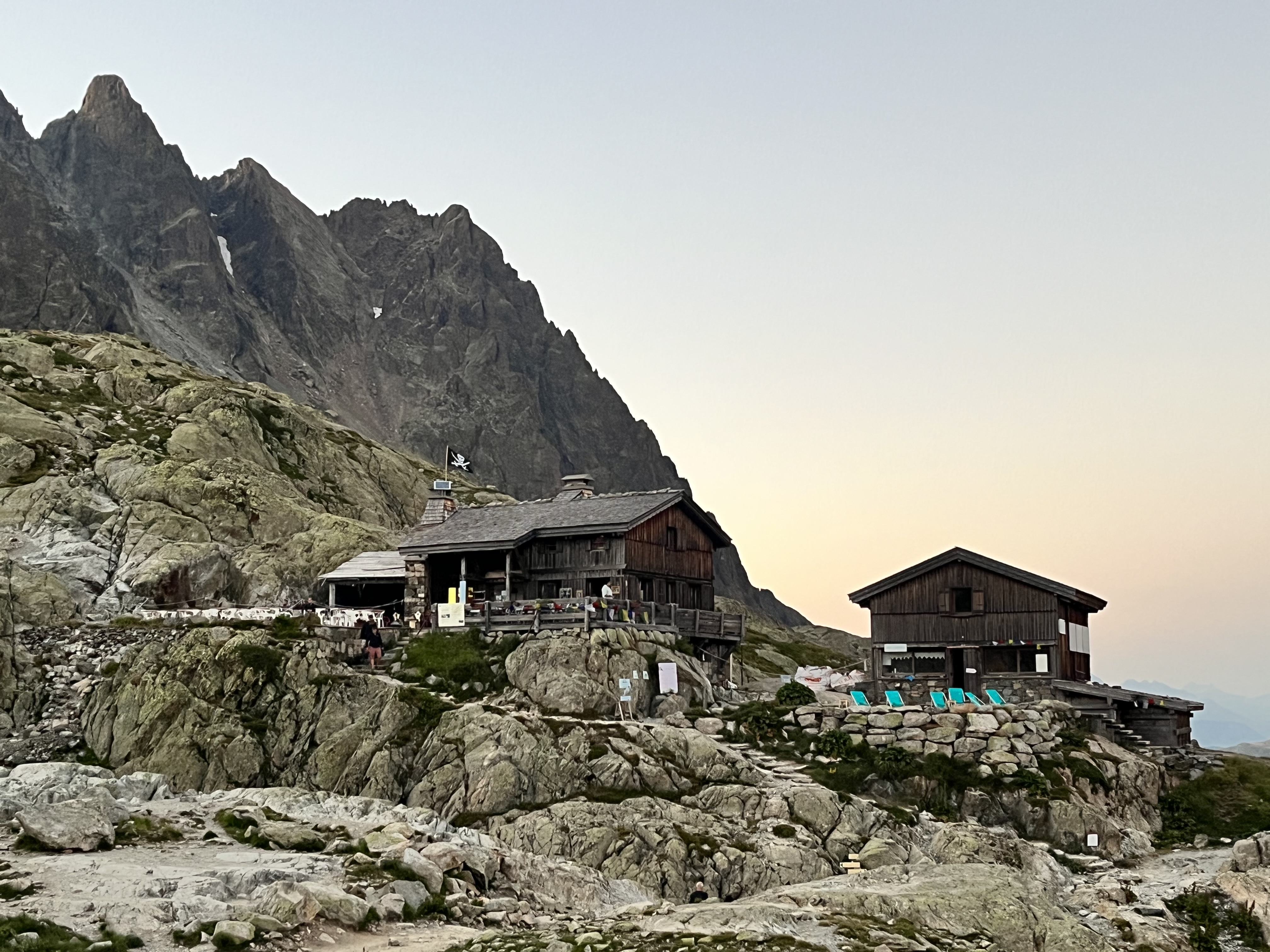
In the summer of 2023, my partner Jaimie and I completed the Tour du Mont Blanc — the full loop, through France, Italy, and Switzerland, around the most iconic massif in the Alps. We drank cold beers on the deck of a refugio above Courmayeur and watched the sun set over Mont Blanc. We were hikers then. Adventurers. But something about that valley, those peaks, that air — it asked me a question I wasn't ready to answer yet.
What if you ran it?
II Qualifying
You don't simply sign up for the CCC. You earn it.
The UTMB World Series requires points — race currency accumulated through qualifying events around the world. I spent two years building my ticket. The Canyons 50K in 2023. Grindstone 100K in September 2024, where I ran 16:22 and finished 107th overall. Black Canyon 100K in February 2025 — 15:22, 422nd. Each race a stepping stone, each finish line a down payment on a dream that had started on a hiking trail above Courmayeur with a cold beer in my hand.
By the summer of 2025, I had my points. I had my bib. And I had just come off the best training block of my life, capping it with a self-created FKT — the White Mountains Notch Traverse in New Hampshire. Standing on those granite ridges above the notches, lungs burning, I remember thinking: if you can do this in the Whites, you can do this anywhere in the world.
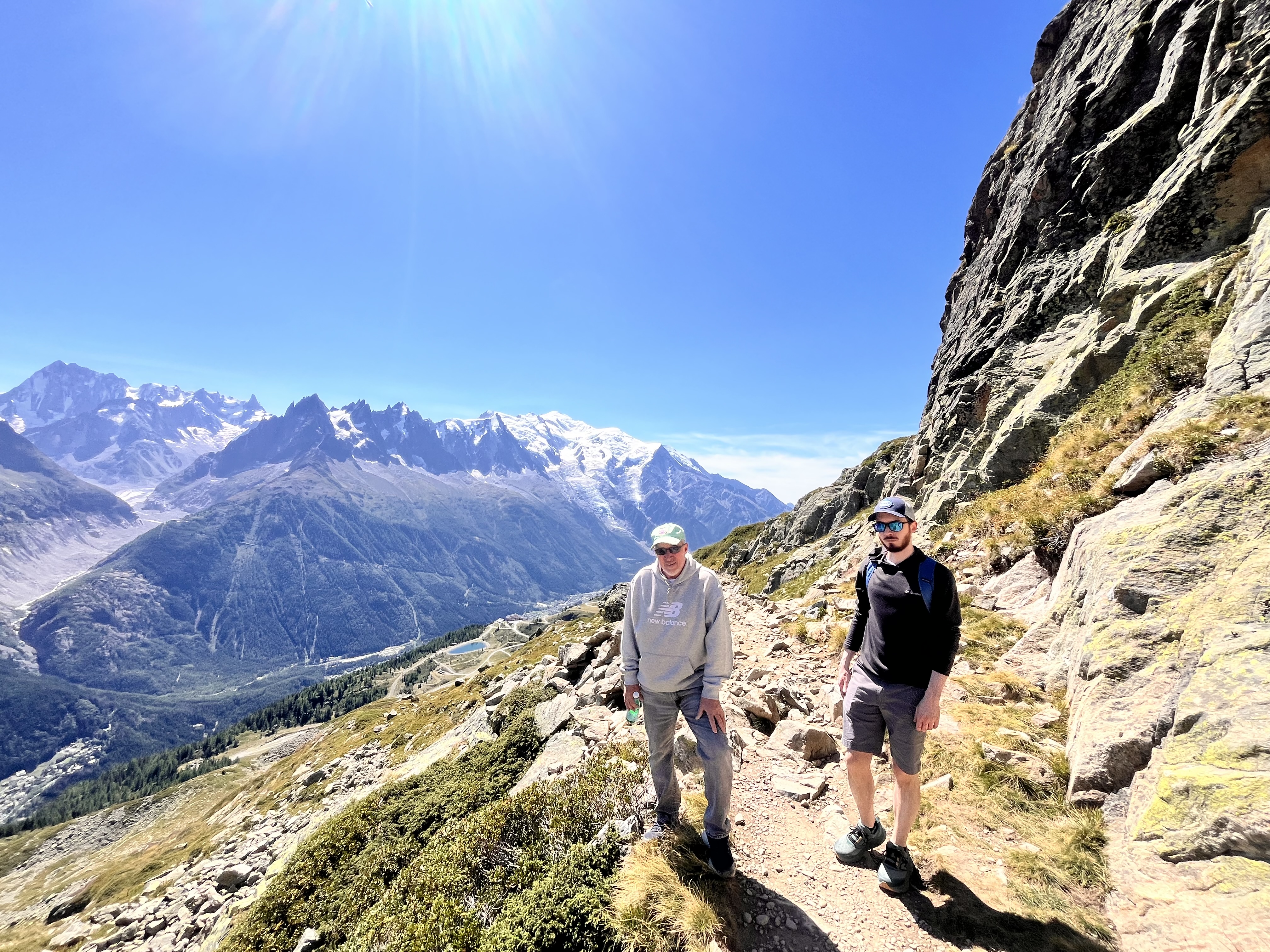
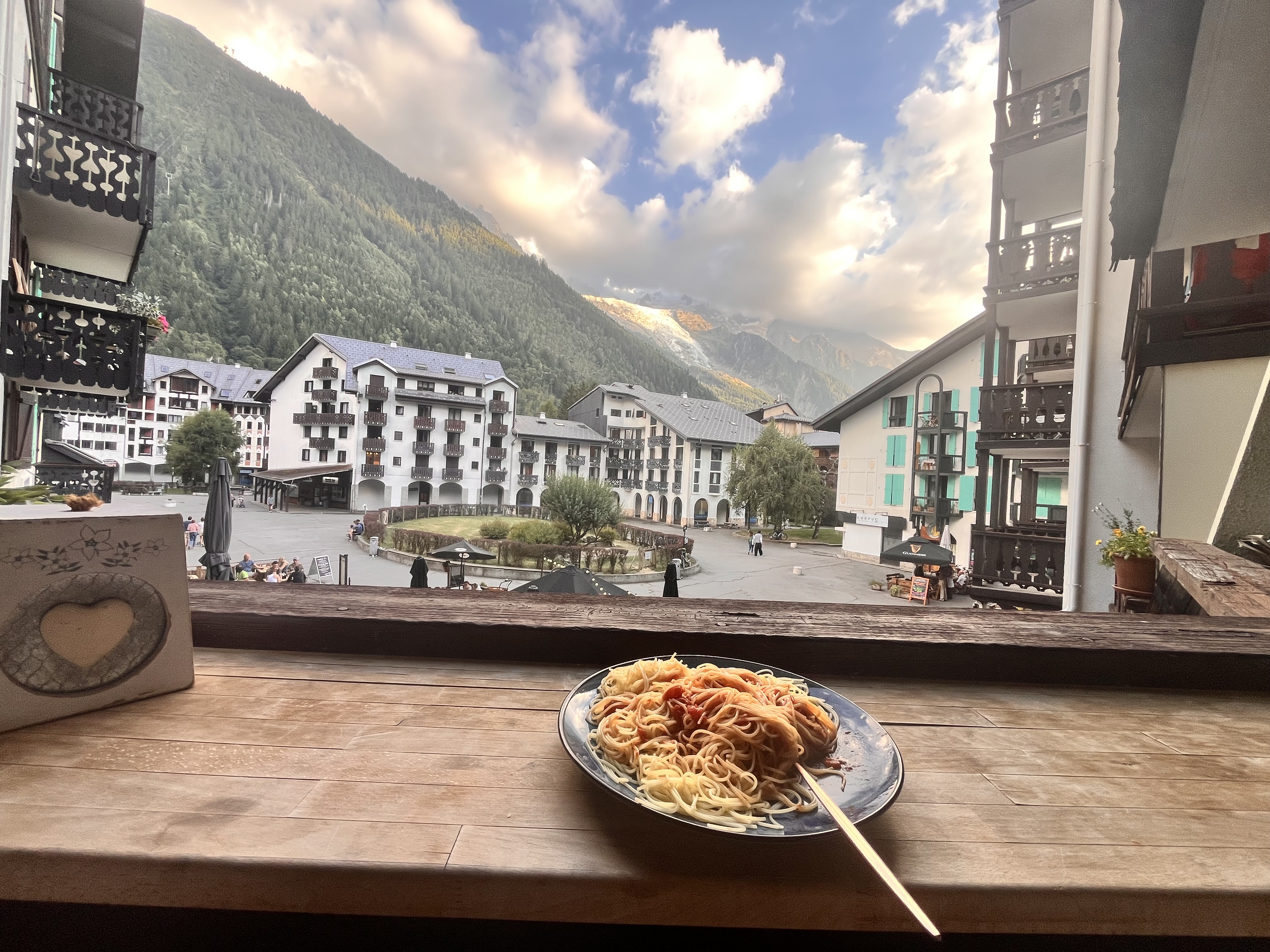
I arrived in Chamonix three weeks early. The week before the race, I climbed the opening section of the CCC route solo — the brutal 1,400-meter ascent from Courmayeur up to Tête de la Tronche — just to know what was coming. To look it in the eye before race day.
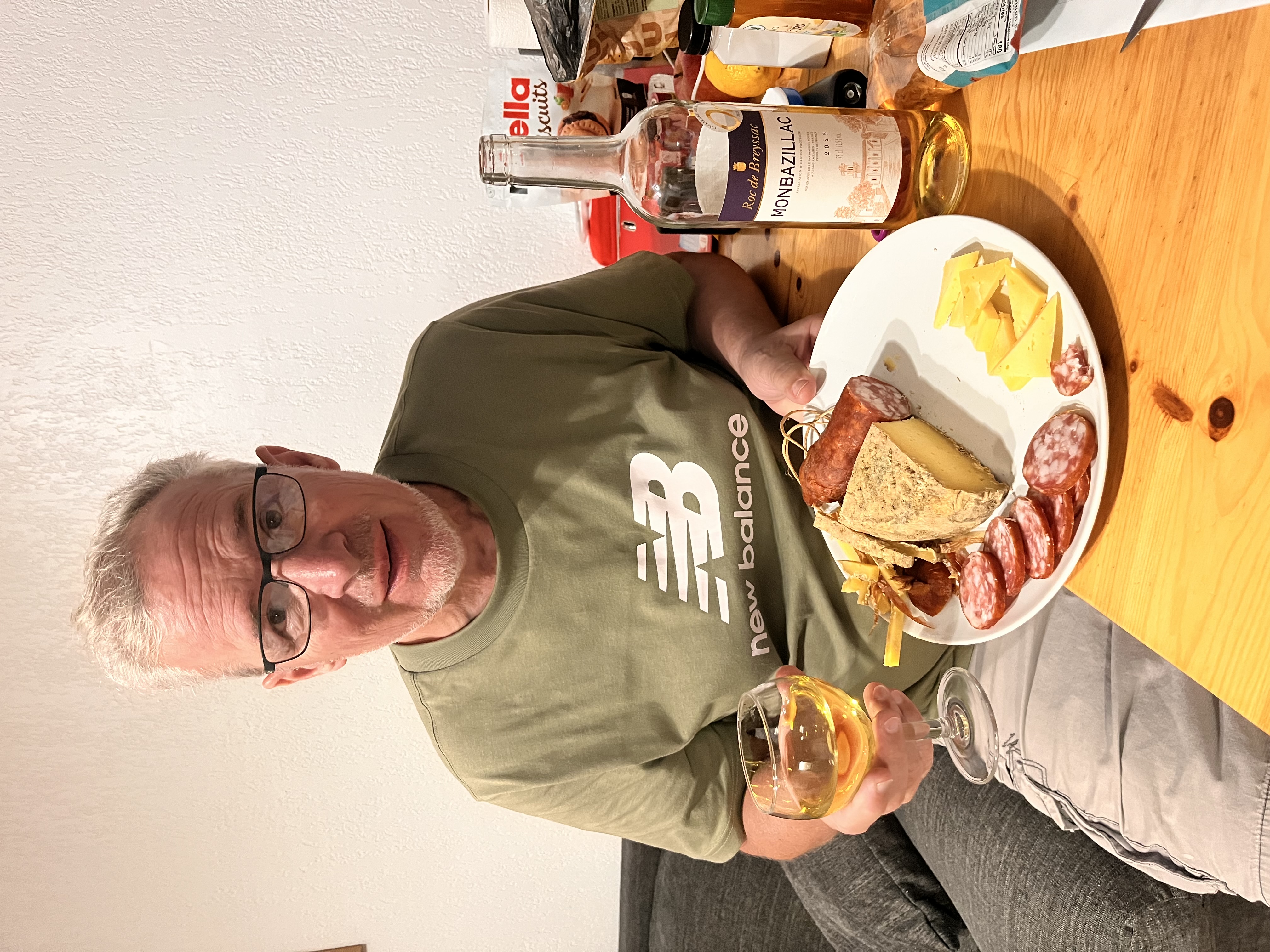
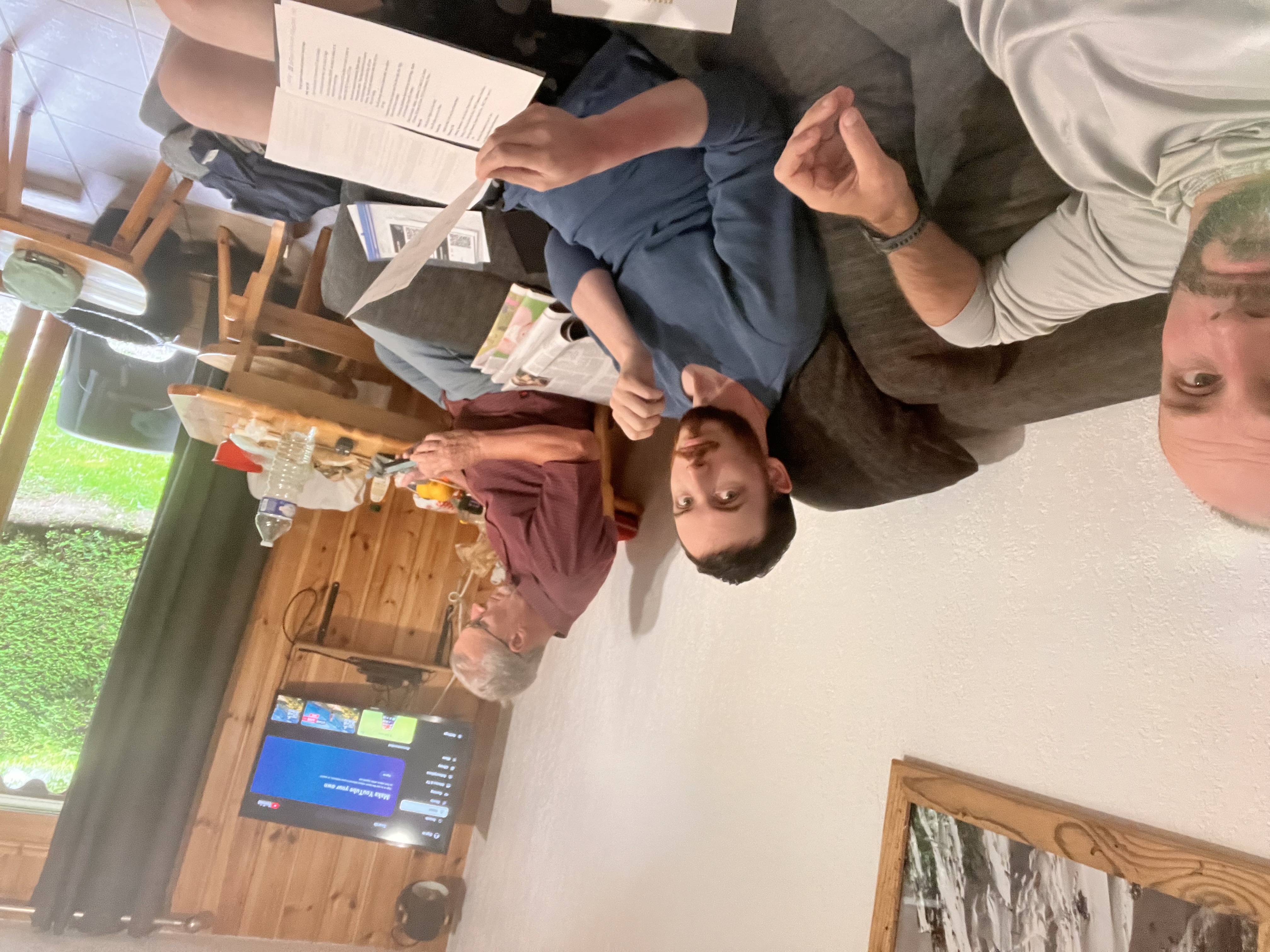
My father Tom and my brother Stefan flew in the Sunday before the race. They would be my crew. My people. I didn't fully understand yet how much that would matter.
III Race Start
The alarm in Les Houches felt almost violent. But I was already awake.
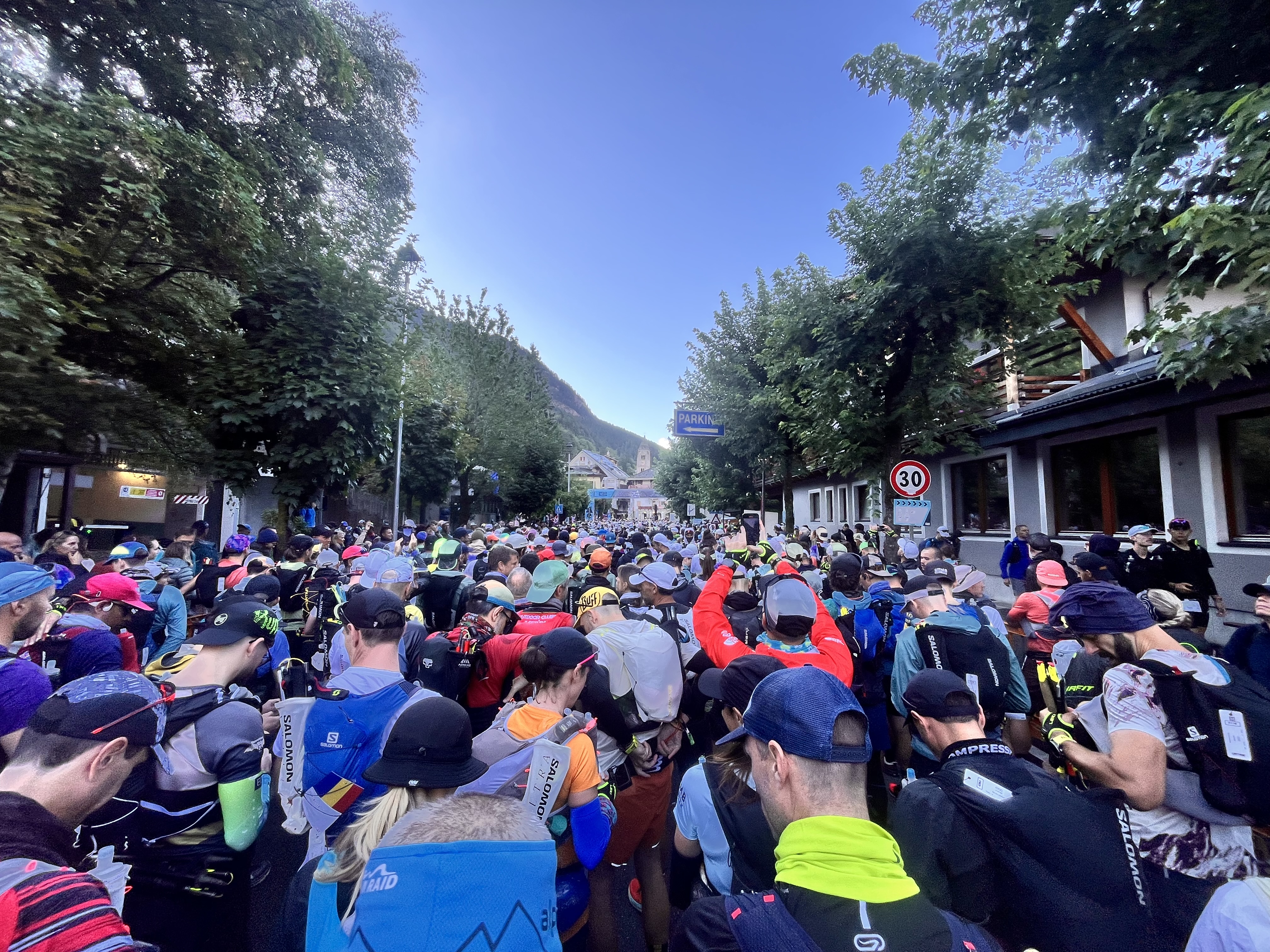
We loaded onto the UTMB shuttle at 6:00 AM, my dad and Stefan beside me, headlamps and coffee and the particular silence of people about to do something enormous. The bus descended through the Mont Blanc Tunnel and emerged into Italy, into Courmayeur, into the pre-dawn blue of a perfect August morning. Nearly 1,800 runners filled the start area — a city of headlamps and trekking poles and nervous energy and twenty years of someone's dreams compressed into a single bib number.
Mine was 4569.
The gun went at 9:15 AM under skies so clear they seemed almost generous. What the mountains were about to do to us later, they hid beautifully that morning.
IV The Climb
The CCC does not ease you in. It grabs you by the balls.
Nine point three kilometers. Fourteen hundred meters of climbing. Straight up out of Courmayeur on singletrack so narrow that 1,800 runners become a single slow thread stitched into the mountainside. For the first two hours, there was no racing — only moving, breathing, existing inside a human chain ascending toward the sky.
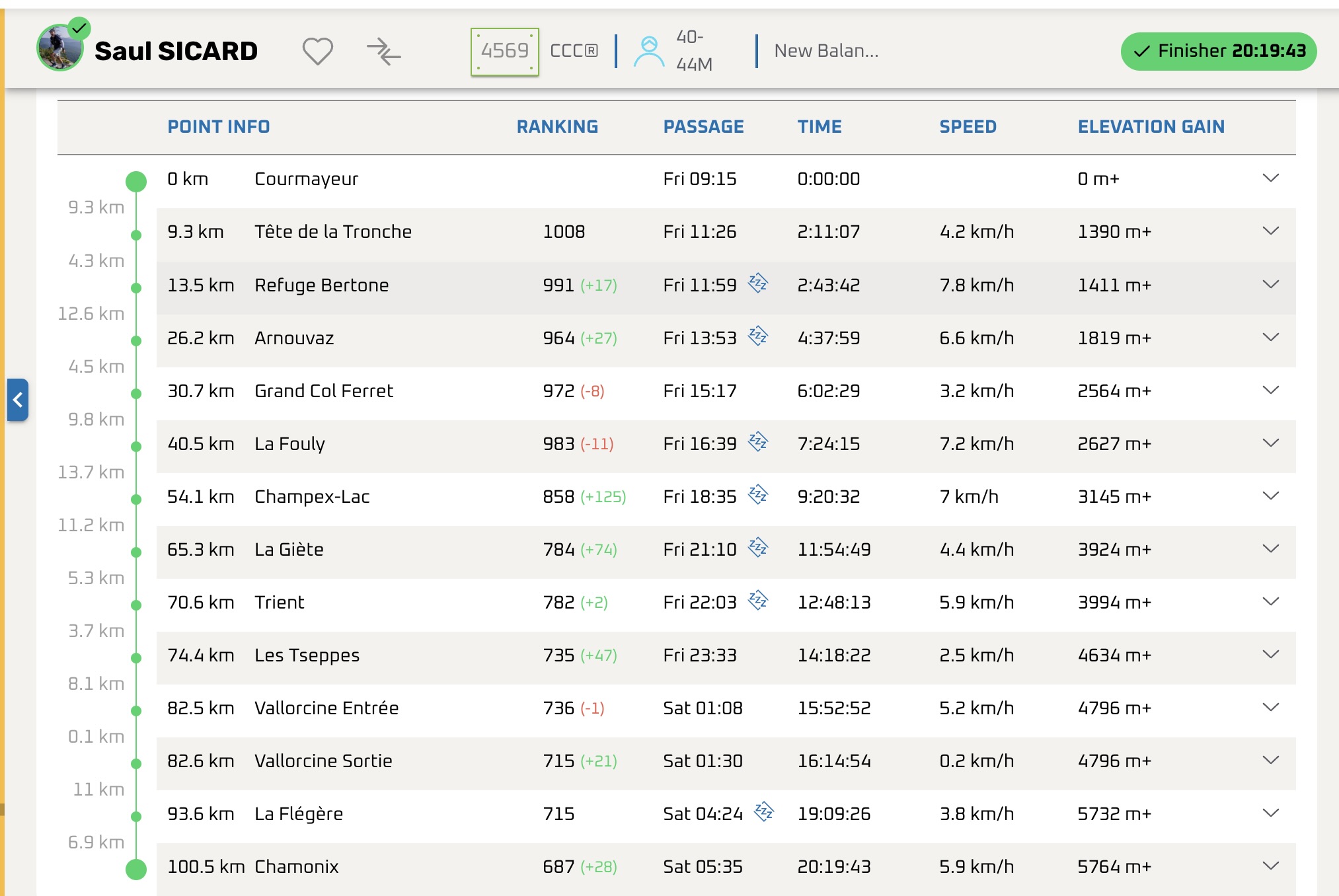
I had climbed this exact route the week before, alone, in the quiet. Now it was alive with poles and breath and the shuffling of a thousand feet finding their rhythm. I let myself be carried by it. At the top of Tête de la Tronche, ranked 1,008th, I looked back at what we had just climbed and felt the first real surge of something electric.
We are actually doing this.
V Val Ferret
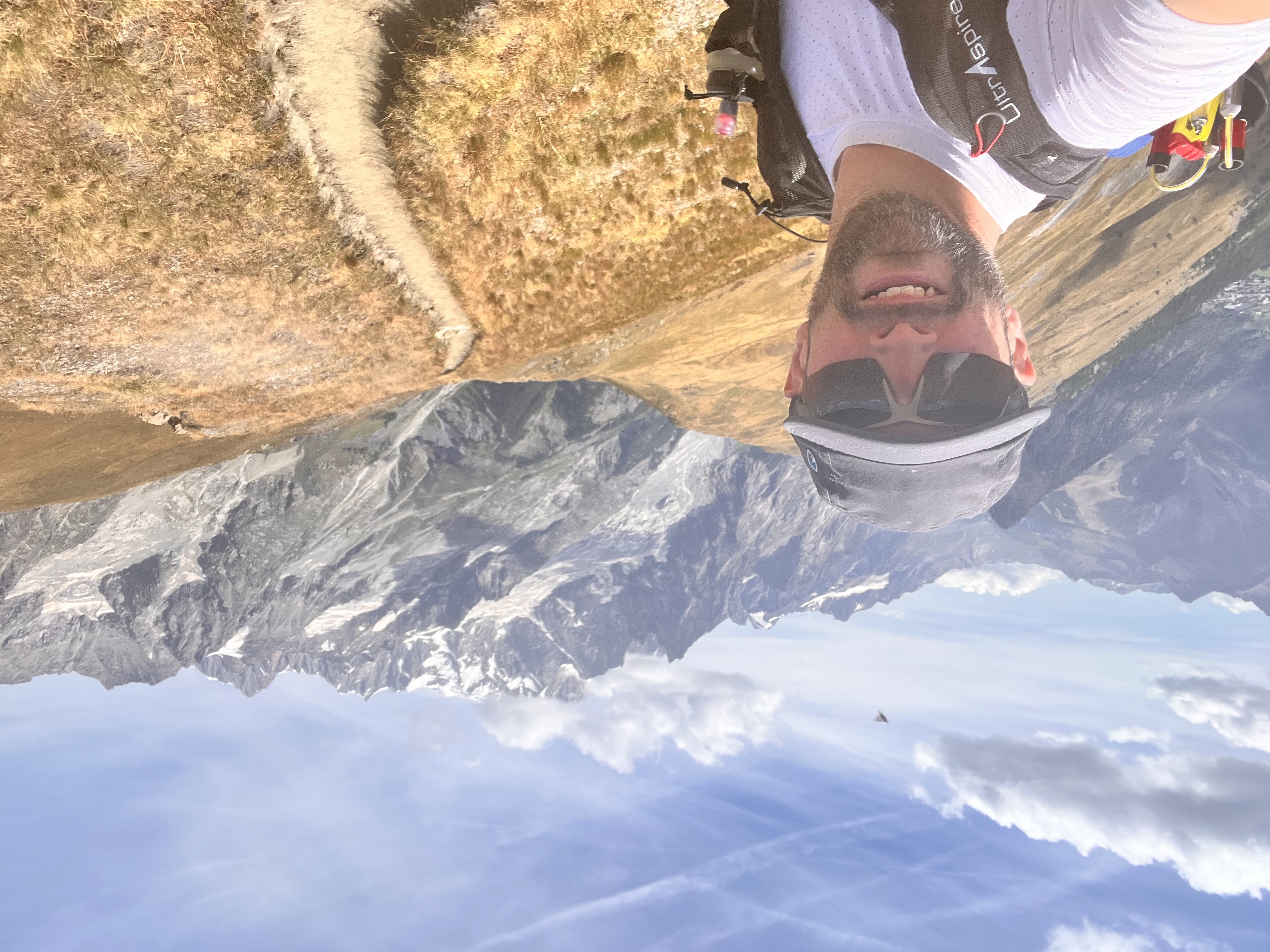
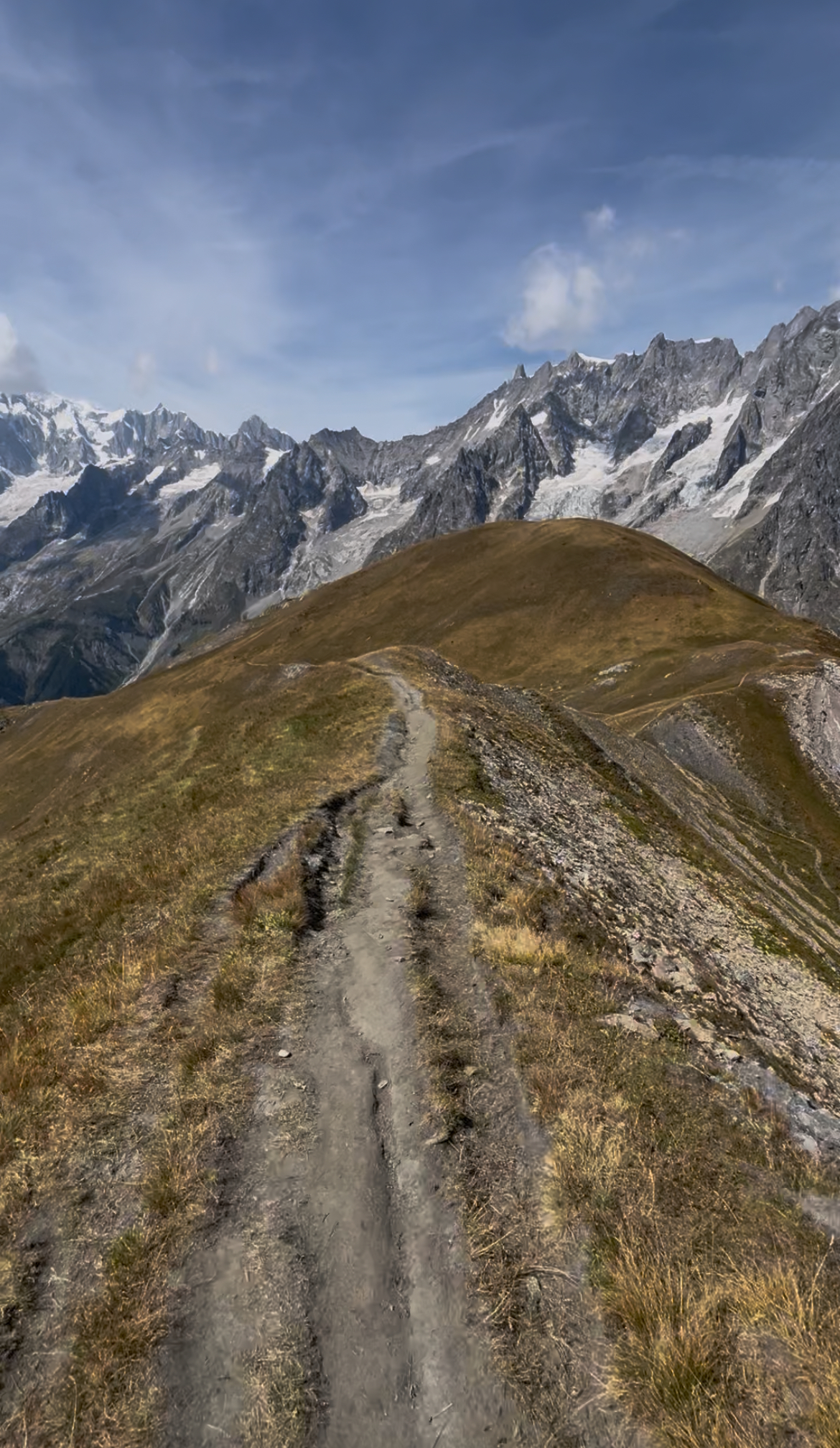
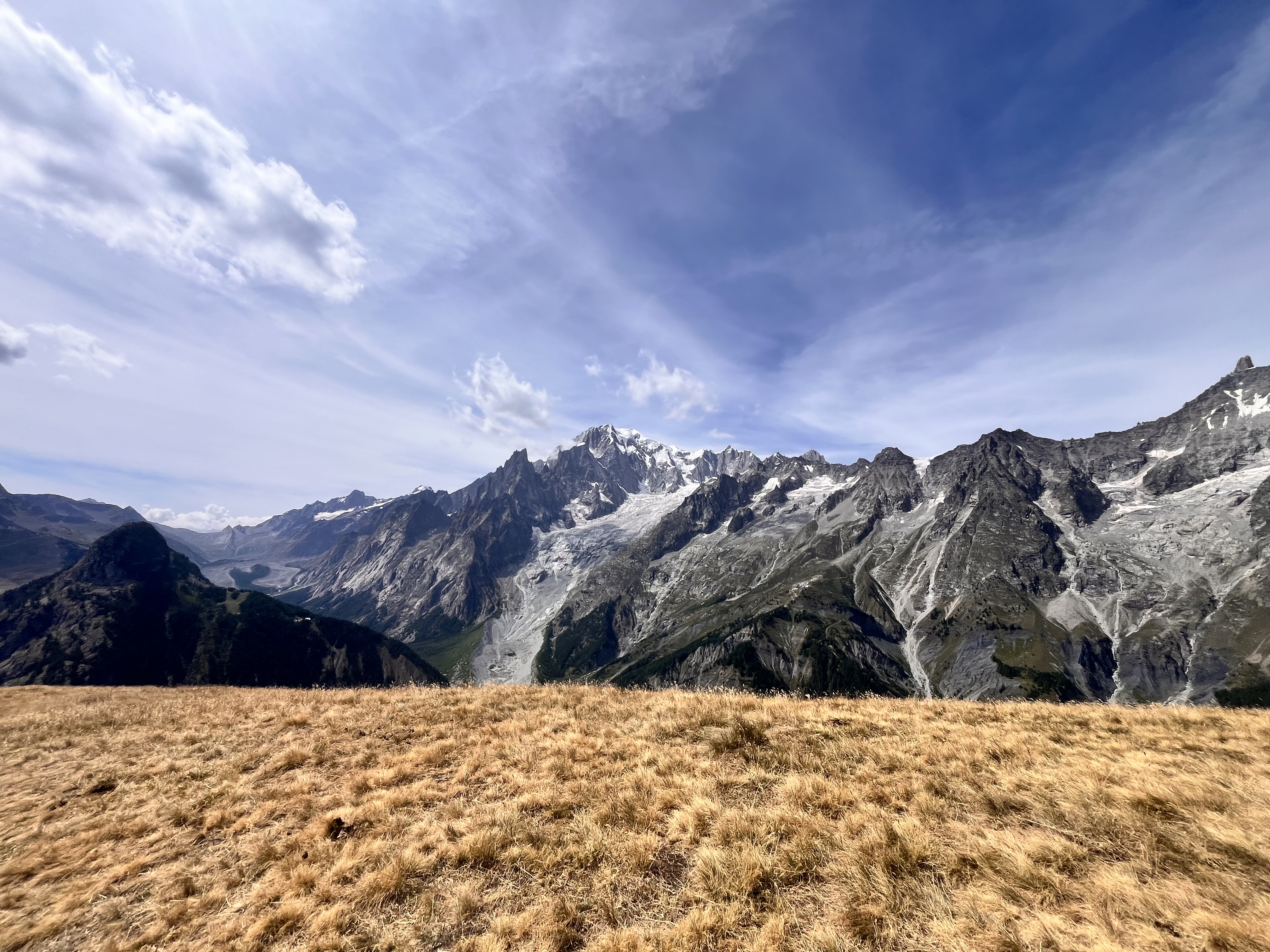
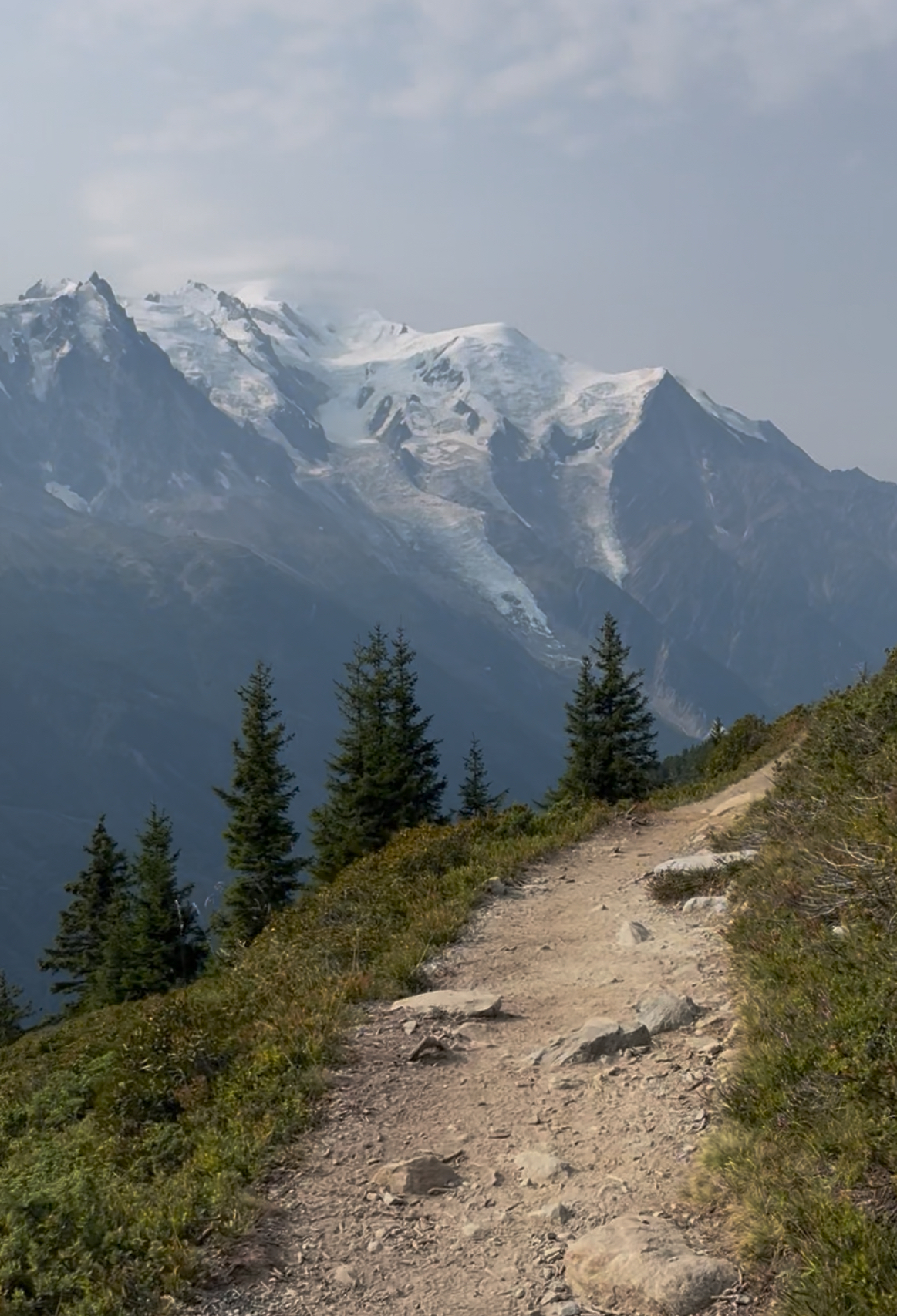
From Refuge Bertone, the route opens up onto a high ridgeline traverse that I will spend the rest of my life trying to describe to people who haven't seen it.
As I ran past Bertone, I glanced down at a villa on the hillside below — the same one where Jaimie and I had stayed two years earlier. I could almost see us on that deck, cold beers, sunburned shoulders, laughing about how far we'd walked that day. The memory lasted about four seconds before the trail demanded my full attention again, but it was four seconds of pure, clean joy.
The line from Bertone across to Refuge Bonnati and toward Arnouvaz runs high above the Italian Val Ferret with Mont Blanc filling the entire northern sky. I have run in beautiful places. I have stood on summits and ridgelines on multiple continents. This is the most beautiful trail I have ever been on. Full stop. The kind of beauty that makes you feel like you're trespassing on something sacred — and incredibly lucky to be doing so.
I was moving well. Passing people. Somewhere along this traverse my hydration nozzle popped off my flask and rolled down the hillside, and by some miracle of gravity or luck I spotted it and scrambled to retrieve it. A small thing. It didn't feel small. My dad and Stefan wouldn't reach me until Champex-Lac — nearly 30 kilometers away. That nozzle was the difference between one bottle and two for the next five hours.
I rolled into Arnouvaz having passed 44 runners, quick stop, out the door. The next climb was waiting.
VI Grand Col Ferret
I knew this one was coming. Everyone does.
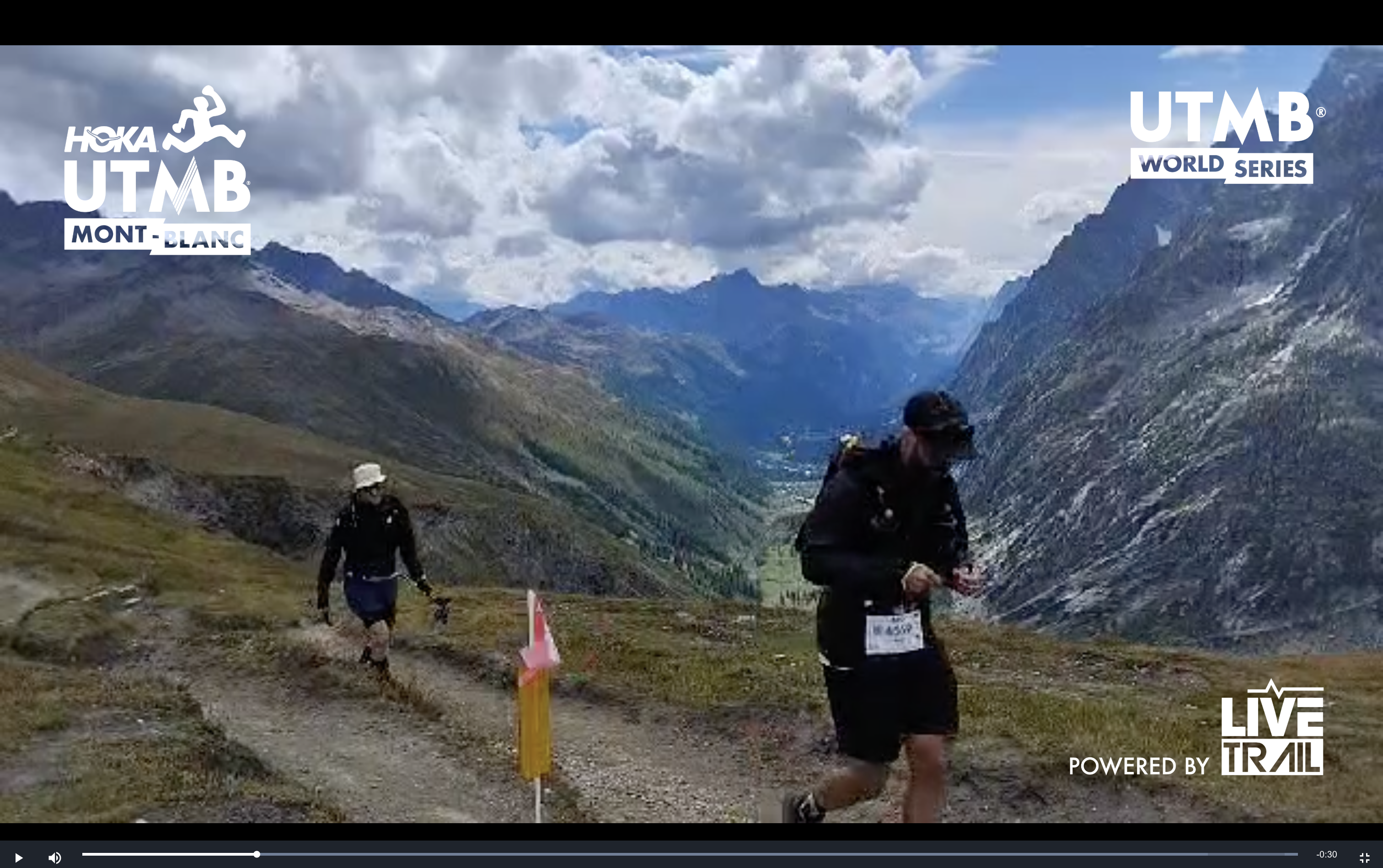
The climb to Grand Col Ferret is 745 meters in 4.5 kilometers — relentless, exposed, and windy. I pulled on my windbreaker as the gusts hit 20 to 30 miles per hour and I ate gels methodically, loading fuel for the long descent to come. At the top, on the Swiss border, someone took a photograph of me — black windbreaker, gel in hand, passing the camera — and in it I look exactly like I felt: determined, slightly battered, completely present.
The descent to La Fouly was steady and efficient. I wasn't pushing — I was protecting. The sky was still clear but I could feel the day beginning to turn. The light had a weight to it. I kept thinking: take this in now. Enjoy the warmth now. The night is coming.
I left La Fouly fast. Very fast.
VII The Surge
There is a moment in every long race — if you're lucky — when something clicks and you stop managing your effort and start racing. Between La Fouly and Champex-Lac, that moment arrived for me like a freight train.
I passed over 125 runners in 13.7 kilometers.
Part of it was fitness. Part of it was the terrain playing to my strengths. But a significant part of it was simpler and more human than any of that: my dad and my brother were waiting for me at Champex-Lac, and I wanted to get there. I was running on something deeper than glycogen. I was nine hours and fifty kilometers into one of the hardest races in the world and I was smiling.
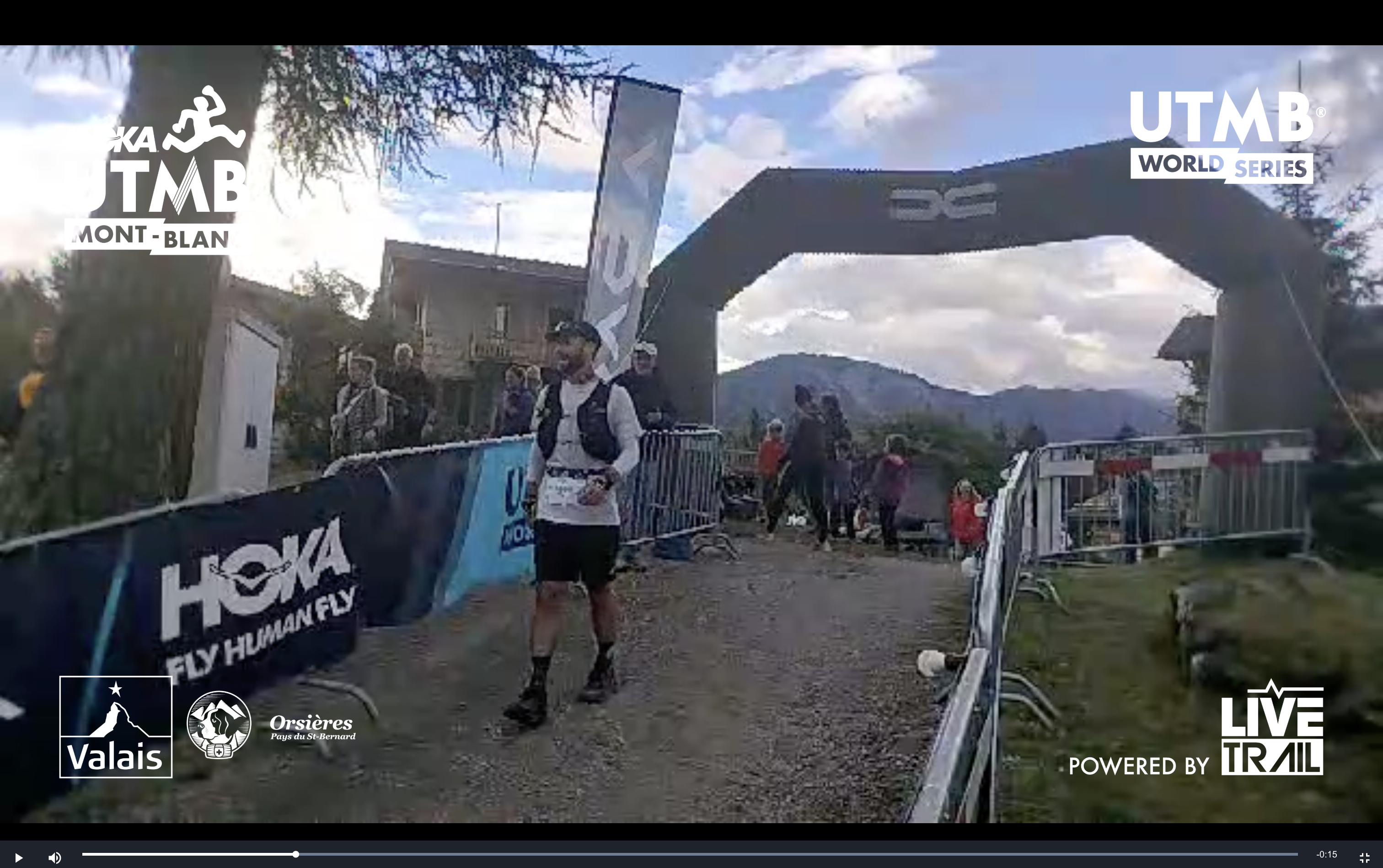
I arrived at Champex-Lac ranked 858th. I had just gained 125 places in a single segment. The lake shimmered in the late afternoon light. And there they were — Stefan with my drop bag already open, organized and ready like he'd been crewing races his whole life, and my father, Tom, with the look on his face that only fathers have. The one that says: I see you, I'm proud of you, keep going.
I stopped for 15 to 20 minutes. Changed my shirt. Put on my rain jacket. Stefan restocked both hydration flasks without being asked. My father didn't say much. He didn't need to.
Just as I stepped out of the aid station tent and back onto the course, the sky opened up.
VIII Night Operations
The rain did not stop.
From Champex-Lac to the finish — 46 kilometers — I ran in rain that varied only between heavy and torrential, with temperatures dropping as we climbed toward the high passes. The tops of the peaks turned white. What had been a perfect alpine day became something rawer and more serious.
But I was ready for it.
Through La Giète the rain hit full force, and I could see the race beginning to fracture around me — the gap widening between those who had trained for this and those who had hoped they wouldn't need to. I kept my pace, kept my plan, and passed another 70 runners through this section. The field was thinning in the way that only happens in bad weather — attrition, not competition.
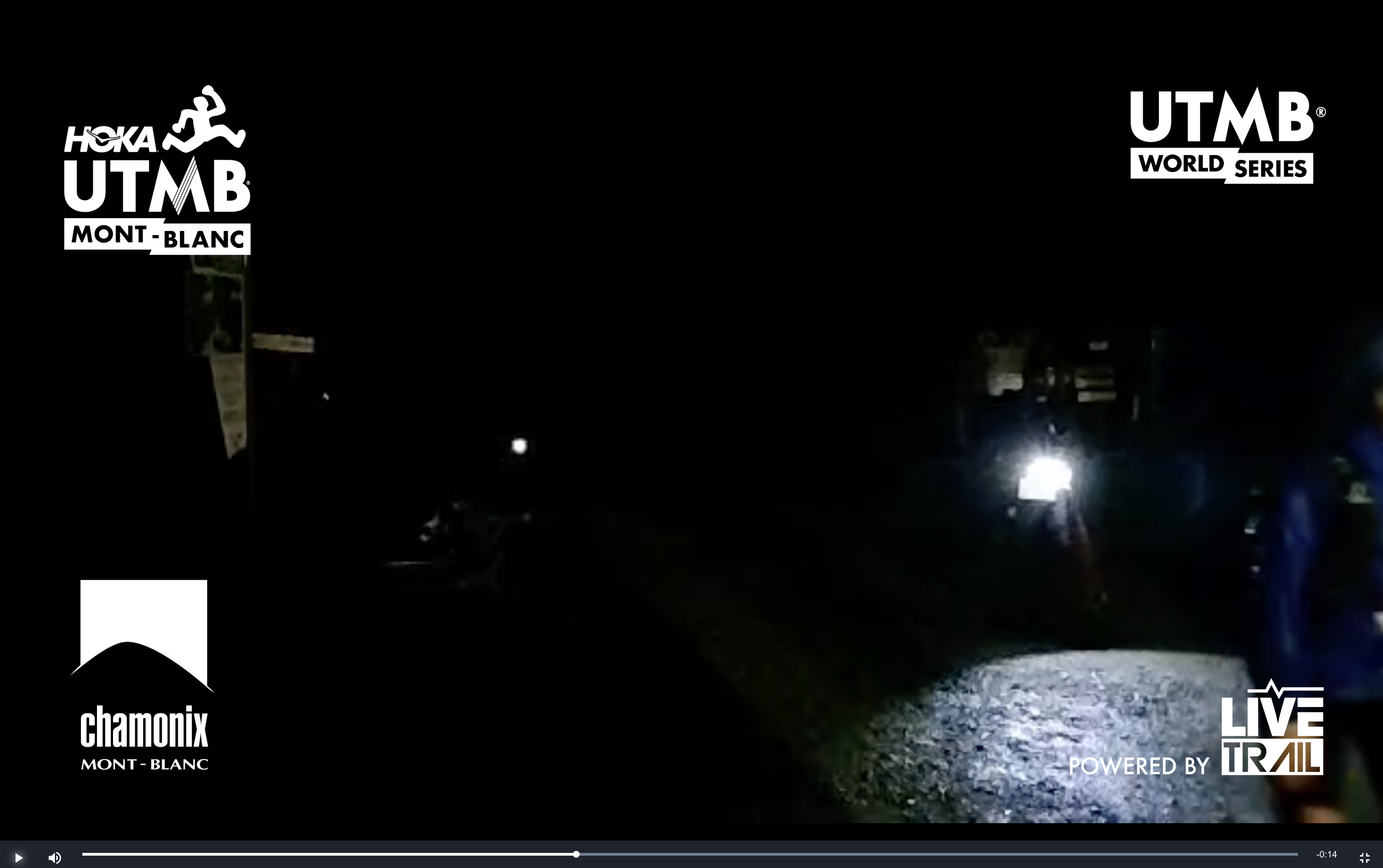
I ran into Trient still feeling strong, switched to full night operations — headlamp on, waist light on, backup batteries accounted for — and pushed toward the final high section. The climb from Trient toward Vallorcine and over the last exposed ridge was where the race became genuinely brutal. Wind and snow. Slick rock. Runners moving carefully, some not moving at all. I passed somewhere around 50 more people on this section, and at this point in a 100-kilometer race, in the middle of the night, in a snowstorm, passing people is not a tactical decision. It's rocket fuel.
I rolled into Vallorcine at 1:08 AM.
IX The Last Camp
The Vallorcine aid station looked like a field hospital.
The tent was packed wall to wall with runners in various states of survival — wet, shivering, hollow-eyed, some being treated for falls and hypothermia. Stefan found me immediately but there was no table — every surface occupied by someone in worse shape than me. I did a full change: dry pants, dry base layer, everything. I bundled up like I was going back to war, because I was.
My dad and Stefan would not see me again until the finish line. This was it — the last handoff. Stefan loaded me up. My dad looked at me the way he had at Champex-Lac, except now it was 1:30 in the morning and we had both been out in this storm for sixteen hours.
I walked back out into the rain and the dark and did not look back.
X The Alarms
The section from Vallorcine to La Flégère is not fast. It threads through technical terrain — rocky, wet, unforgiving — crosses a road, drops into a valley, climbs back up. In the rain and dark it becomes a puzzle you solve one headlamp beam at a time.
Somewhere on the climb to La Flégère, I found myself leading a pack of about fifteen runners. No one was talking much. We were beyond language, beyond nationality, beyond anything except the shared project of getting up this mountain. I set the pace with my waist light cutting through the dark, and they followed, and we moved together like something ancient and instinctive.
At 4:15 AM, the mountain erupted in alarm sounds.
Three, then five phones going off simultaneously — the previous day's wake-up alarm, still set, firing on autopilot at exactly 4:15 AM. Yesterday morning we had been sleeping. Now we were here. The absurdity of it broke over all of us at once and we laughed — real, genuine, unguarded laughter — there on a dark mountainside in a snowstorm at four in the morning, and it was one of the best moments of the entire race. Those alarms put everything into perspective in an instant. One more climb. One more aid station. Then home.
La Flégère was chaotic — the timing bad, several runners violently ill, the tent overwhelmed. I moved through quickly, offered help where I could, and stepped back outside into the pre-dawn dark for the last time.
XI The Descent
And then something shifted.
The rain had softened. The sky to the east was doing something tentative and grey and beautiful. Below me — somewhere below me in the dark — was Chamonix. The valley I had walked into two years ago as a hiker. The valley that had asked me a question.
I opened up.
6.9 kilometers. 5.9 km/h. I passed 28 more runners on that descent, not because I was racing them but because my legs, somehow, after 93 kilometers and twenty hours and a full night of alpine weather, still had something left. I was fit. I was strong. I had trained for exactly this moment — when everyone else was surviving and I could still run.
I crossed the finish line in Chamonix at 5:35 AM on Saturday, August 29th, 2025. 20 hours, 19 minutes, and 43 seconds after leaving Courmayeur. 687th out of 1,641 starters. 536th in my age group. My father and Stefan were there at the finish, having navigated an entire night of buses and weather and waiting — and that, more than any number on the clock, is what I will remember.
We grabbed an Uber and got back to the chalet in Les Houches.
XII What It Meant
"The valley called me back.
I answered."
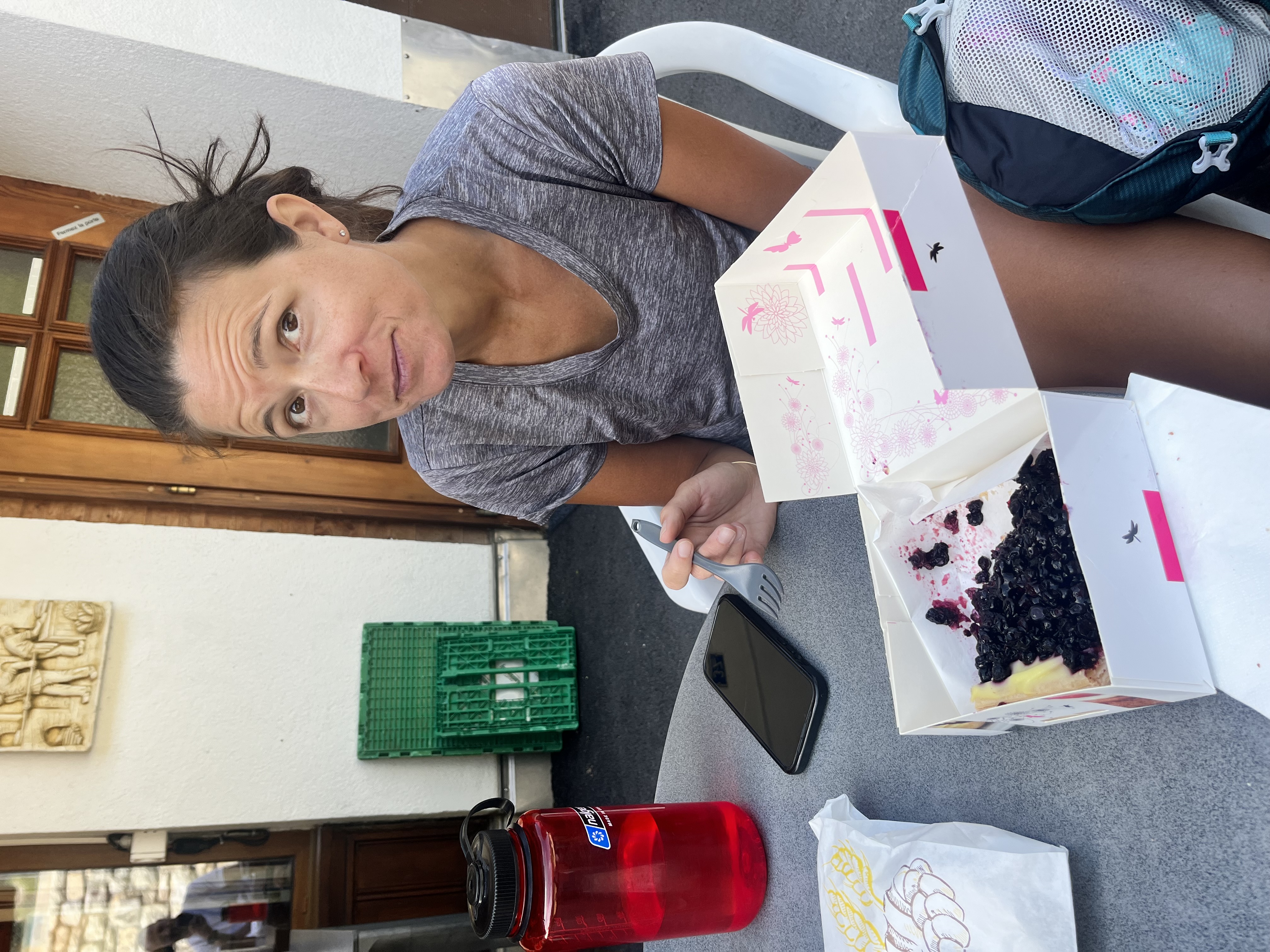
I am most proud, in the end, not of my time or my rank or the places I passed in the rain. I am most proud of my father and my brother — who flew across an ocean, rode buses through alpine storms, stood in the cold at 1 AM in Vallorcine and 5 AM in Chamonix, and gave me everything I needed exactly when I needed it.
This race started, really, on a hiking trail above Courmayeur in 2023, with Jaimie beside me and a cold beer in my hand and a question I didn't yet know I was being asked. It took two years of qualifying races, an FKT in the White Mountains, three weeks in Europe, and twenty hours and nineteen minutes of running to answer it.
The valley called me back.
I answered.
XIII Watch